The Real Value Of Wearable Technology In Healthcare Lies In The Data
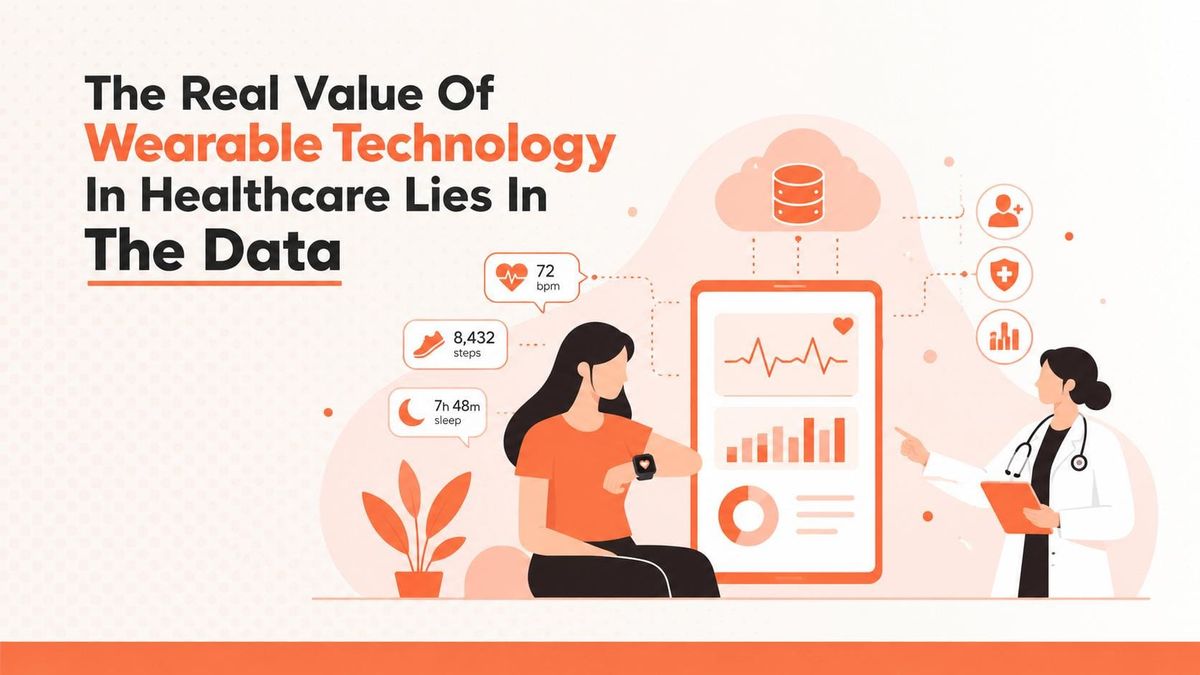
A few years ago, a smartwatch was mostly a way to count steps and close activity rings. Today, the same device on someone's wrist can flag signs of high blood pressure, track sleep over months, and record heart rhythm data that a cardiologist once needed a clinic visit to collect.
The hardware has improved quickly, and people have taken to it. What hasn't kept up is everything that happens after the data leaves the device. Most of it sits inside consumer apps, disconnected from the doctors, care teams and health systems that could put it to use.
That gap is where the real story of wearable technology in healthcare sits right now. The devices are already on millions of wrists and fingers. The value they create depends almost entirely on the software, integrations and data practices that carry their readings into care.
Wearables Have Become Part Of Everyday Health
The scale of adoption is easy to underestimate. Rock Health's latest consumer adoption survey found that 46% of Americans now own a wearable device, with ownership up 33% since 2015.
People also keep them on. In the same survey, 59% said they wear their device always or nearly always, except to charge, and close to half have used one for three years or more. That kind of long, continuous record is something a yearly check-up could never produce.
That everyday habit has also pulled serious investment into the category, with digital health funding reaching $7.4 billion in the first half of 2026, with wearables taking a large share of that capital. Whoop alone raised around $500 million, and Grand View Research expects the global wearable technology market to reach nearly $230 billion by 2030.
Many people now take that data to appointments, and in the same survey, 59% of wearable owners said they had discussed it with their doctor, while another 20% said they would like to but had not done so yet.
Devices Are Moving Closer To Clinical Use
The line between a fitness gadget and a medical tool is getting thinner. In September 2025, Apple received FDA clearance for hypertension notifications on Apple Watch. The feature reviews optical heart sensor data over 30-day windows, and Apple expects it to alert more than one million people with undiagnosed high blood pressure in its first year.
Regulators have also made room for more of these products. In January 2026, the FDA updated its guidance on general wellness devices, clarifying that low-risk, non-invasive wearables estimating measures like blood pressure, oxygen levels and heart rate variability can reach the market without a full device review, as long as they avoid disease claims.
Payment rules are shifting in the same direction. Under the 2026 Medicare Physician Fee Schedule, providers can now bill remote patient monitoring for as few as two days of data in a 30-day period, down from the previous 16-day minimum, along with a new code for 10 minutes of monthly management time.
CMS went further in July 2026 with its ACCESS model, a 10-year program that pays organisations for managing chronic conditions such as hypertension, diabetes and obesity through technology-enabled care, with full payment tied to measurable patient outcomes. For wearables, this marks a clear change. Readings are becoming something health systems can be paid to act on.
Where Wearable Health Data Gets Stuck
Walk into almost any clinic today, and there is a good chance the doctor has already seen a patient's wearable data, whether it was a sleep chart held up on a phone or an irregular heart rhythm alert from a smartwatch. A July 2026 American Medical Association survey of 2,222 physicians found that nearly all of them had reviewed wearable data in some form, with cardiologists and endocrinologists leading the way, which makes sense given how closely their work follows heart rhythm and blood sugar over time.
The same survey also shows how rarely that interest becomes routine care, since fewer than 6% of physicians have made wearable data part of their clinical workflow. For most doctors, it remains something they glance at during a visit, and it rarely flows into the patient record or shapes a treatment plan.
The AMA traced that gap to three barriers: unclear reimbursement, poor fit with clinical workflows, and data infrastructure that doesn't connect well with electronic health records. In practice, this means a patient shows a doctor a graph on a phone, and the conversation ends there because the data has nowhere to go.
Accuracy is another concern, and the U.S. Government Accountability Office published a technology assessment in August 2026 that recognised the promise of wearables for faster diagnosis and remote monitoring, while noting that devices vary widely in accuracy and reliability. One of its policy options was a certification database to help clinicians and patients identify dependable devices.
Taken together, these findings point to one weak spot: the layer that collects, checks, organises, and delivers the data to the people who need it.
Privacy Rules Change As The Data Moves
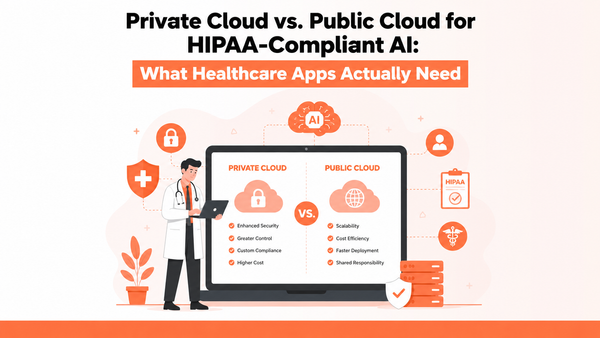
Many companies building with wearable data are surprised to learn that the same heart rate reading can fall under different privacy laws depending on where it ends up. A reading that stays inside a fitness app is governed by one set of rules, and the moment it reaches a hospital or a vendor working for one, a stricter set takes over.
For readings that stay inside a consumer app, HIPAA usually does not apply, although those apps still fall under the Federal Trade Commission's Health Breach Notification Rule, which was updated in 2024 to cover health apps and connected devices outside HIPAA. The rule treats unauthorised sharing, such as passing health data to advertisers, as a breach, and violations can bring civil penalties.
Once the same data flows to a hospital, a clinic or a vendor working on their behalf, HIPAA obligations come into play. Encryption, access controls, audit trails and business associate agreements then become formal requirements. We covered what that looks like in our guide to building HIPAA-compliant AI in healthcare.
For anyone building in this space, the safest approach is to design for the stricter standard from the start. Retrofitting privacy after launch is slower, more expensive, and harder to explain to partners.
What It Takes To Make Wearable Data Useful
Turning wearable readings into something a care team can act on is mostly a software problem. It usually comes down to four pieces of work.
Connecting to the right data sources. Most consumer health data reaches apps through Apple HealthKit on iOS and Health Connect on Android, and both platforms keep changing. Google has confirmed its older Google Fit APIs will stop working after 2026, so any app still relying on them needs to move to Health Connect or the Google Health API soon.
Getting the data into clinical systems. Readings only help clinicians when they show up where clinicians already work, which means the EHR. That calls for standards-based integration, typically through FHIR APIs, with systems like Epic and Oracle Health. We explored why this step matters so much, and why EHR integration is the make-or-break factor for healthcare apps.
Checking quality before anyone relies on it. Newer programs expect data to be trustworthy by design. The CMS ACCESS model requires participants to use secure, interoperable systems, and data pipelines increasingly need to record where each reading came from, when it was taken, and which device produced it.
Turning streams into signals. A clinician has no time to scroll through a month of heart rate data. The useful layer filters noise, spots meaningful changes, and presents a short summary or alert. This is where AI earns its place, as long as its outputs are explainable and reviewed by people.
Where Wearable Technology In Healthcare Goes Next
Wearable technology in healthcare now has most of what it needs to become part of everyday care. The devices are widely worn, doctors are interested in what they record, and Medicare has started paying for care built around remote data. What is still missing in most places is the software that connects those three.
The companies that build that connection will shape the next phase of digital health. Some will be device makers, but many more will be health systems, startups, and care providers building the apps, integrations, and dashboards that turn raw readings into clinical decisions.
At TechEssentia, we work with healthcare teams on exactly this layer, building secure, HIPAA-compliant apps that bring wearable health data into the systems where care decisions are made. If you're exploring a remote patient monitoring product or looking to make better use of the wearable data you already collect, our team would be glad to talk it through.