Top Technology Trends Defining Business in 2026
Technology in 2026 is a double-edged sword. It can accelerate a company faster than ever before, and just as quickly expose its weaknesses. AI is advancing at lightning speed, including generative and agentic AI, with 80% of companies already using it in at least one business function and more than 90% planning to expand their AI investments, highlighting how deeply AI is becoming embedded in enterprise operations.
At the same time, as businesses step into the new year, several technology trends are accelerating. And what makes this moment different is not just the speed of change but how deeply these shifts are connected.
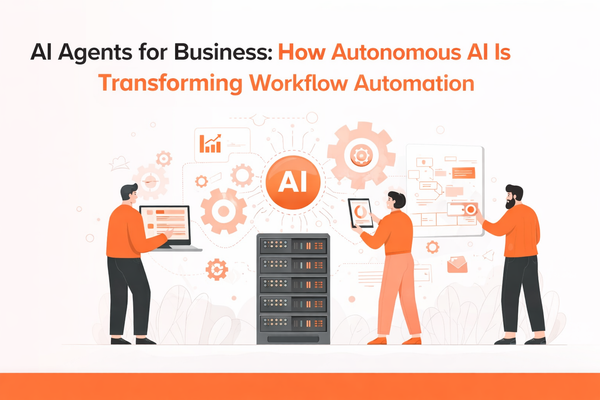
It starts with AI becoming more autonomous. We’re no longer talking about systems that wait for prompts. AI is beginning to analyse situations and take action within workflows. And that evolution naturally leads to the rise of ambient intelligence, where AI isn’t a separate platform, but something embedded quietly into emails, CRMs, supply chains, customer support chats, and internal tools, like it becomes part of the environment.
To support this shift, computing power is moving closer to where data is generated, enabling real-time decisions across distributed environments. But as systems become more autonomous and interconnected, traditional security models are being tested. Trust, resilience, and governance are becoming as important as performance.
These trends are not isolated upgrades. They are fundamentally changing how work is executed, how systems communicate, and how companies prove their technology is reliable enough to run real operations. The technology trends shaping business in 2026 reflect this shift, in which opportunity and responsibility now move in parallel.
Heading into 2026, a few key technology trends are starting to define how businesses operate, compete, and innovate. Here’s a closer look at the top trends shaping AI, operations, and enterprise strategy this year.
Autonomous AI Takes Command
In 2026, AI is moving from suggestion to action. The operationalisation of autonomous AI means systems are no longer just passive assistants, but rather they analyse situations and execute decisions directly within workflows. And this shift gives businesses faster execution and a sharper competitive advantage. However, without the right governance, autonomous systems can just as easily amplify risk. Companies that balance autonomous AI innovation with oversight and governance will lead the market. According to theIBM Institute for Business Value CEO Study, 61% of executives say competitive advantage now depends on the most advanced generative AI. And this makes one thing clear that more than a technical experiment, autonomous AI is a strategic differentiator.
Ambient Intelligence Becomes Invisible Infrastructure
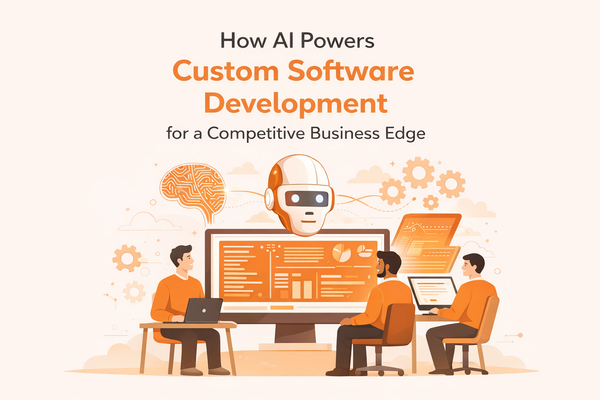
AI is no longer a separate platform; it’s quietly embedded into emails, CRMs, supply chains, collaboration tools, and customer support systems. This AI, as an enterprise fabric improves decision-making, productivity, and responsiveness, seamlessly becoming part of the environment. However, organisations must maintain transparency and human oversight to prevent hidden biases or errors. Gartner predicts that by 2026, 40% of enterprise software workflows will feature task-specific AI agents, highlighting the rise of Ambient Intelligence across business operations.
Edge & Distributed Computing Powers Real-Time Decisions
Over 68% of global enterprises have already deployed or plan to deploy AI-enabled edge by 2026. As data volumes explode, relying solely on centralised cloud processing isn’t enough. The distributed compute reset, combining edge and hybrid cloud architectures, moves processing closer to where data is generated, enabling real-time insights and immediate action. A recent report notes that companies leveraging edge computing have cut AI processing delays by up to 90% and reduced network data transfer costs by 30%, helping teams act faster and run operations more efficiently. Industries like manufacturing, healthcare, and logistics gain agility and faster decision-making, though this also introduces new complexity and security demands.
Security, Governance & Tech Sovereignty Take Center Stage
Interconnected systems and embedded AI put traditional security models under pressure. Organisations are now focusing on resilience, governance, and tech sovereignty as strategic pillars. This includes cybersecurity frameworks, compliance with regulations, and ethical AI practices. Companies that integrate these pillars into operations not only reduce risk but also build trust and credibility with customers and stakeholders. According to Gartner, 85% of CEOs say cybersecurity is critical for business growth, underscoring how governance and security have become top strategic priorities.
Conclusion
After years of rapid progress in AI, cloud, and enterprise automation, 2026 signals a different kind of shift. The focus is no longer on how fast organisations can adopt new technologies, but on how well they can strengthen the systems behind them.
So this next phase of AI maturity demands alignment across the business:
- Leadership that understands both capability and risk
- Infrastructure that supports real-time, distributed operations
- Governance models that scale alongside automation
- Talent strategies that blend technical expertise with business judgment
Across industries, companies are moving beyond isolated AI pilots and focusing on operational execution. That means investing in skills, modernising infrastructure, reinforcing cybersecurity, and selecting AI solutions that align with long-term business strategy.
As competitive advantage will not come from how loudly an organisation talks about AI. It will come from embedding it carefully and making it work consistently inside the business.